
Jake Bevan, Sticky's in-house video producer, looks at what to bear in mind before putting a video together, whether it be simplifying a shot list or having fun with Foley.
1.Visualise your target audience.

Okay, always start with who's actually going to be watching your film. The video must be tailored to suit your audience and they will naturally have references and language and topics they like and don't depending on age, background, life experience and so on. Bear in mind that what you personally think is entertaining may not be quite as appealing to those you're wanting to impress.
For example, our work with The Consumer Brand has been carefully constructed so that we target each of their audiences in a way they understand and appreciate. This means deliberately considering colours, music, angles etc... all without viewers consciously realising. It's the little details that make a vast difference.
2. Write it all down before going anywhere near a camera.

When talking about moving images, a basic script is a great place to begin. Because it's the simplest way to make sure you're clear on the reason for making the video in the first place. With a script in place you're confident about what the subject matter is and you can start considering - and refining - the content. Even just scripting the call-to-action (CTA) is a process which helps you refine what the whole point of the film is. Then you can work backwards.
3. Be clear on that there call-to-action.

As part of your planning and scripting, it's vital to consider how you want the viewer to react. Whatever it is you are trying to sell or communicate, your story needs to build towards the viewer performing some kind of action as an effect of watching. So the call-to-action needs to be carefully plotted throughout the video as well as the end. One large website URL at the end won't necessarily be enough but subtle - or not-so subtle - cues throughout the story (spoken script on onscreen words) can persuade and push the viewer towards the desired course of action.
And of course, make sure that the end destination is watertight too. If you want people to phone, make sure it'll be answered. If you're asking people to find out more by going to a website, be sure the URL is easy to remember and that it works! You don't want the lasting impression to be that they are put through to a broken link or a website that's impossible to navigate.
4. Troubleshoot up front.

A key part to a successful video production is to work through the ideas and script together with a shot list - mapping and documenting what happens when, where, and how - so you know what you need to do to produce the final result on the screen. It makes sense to do that long before filming so that any errors, gaps, contradictions or content clashes show themselves early on. If you have a voiceover or narrative script, make sure you go through each line verbally, along with the shot list. Saying it out loud is a good check to make sure it sounds right, it makes sense, and that it's not too long.
It's crucial this planning is ironed out before production and post-production stage. A good agency should be able to help you produce all of these elements - script, storyboard, and shot list - and advise you each step of the way. Yes people won't help here, you want an experienced team who know when something will work or not, and who aren't afraid to offer other alternative recommendation if they think what you're suggesting isn't working.
5. Get the best kit possible.
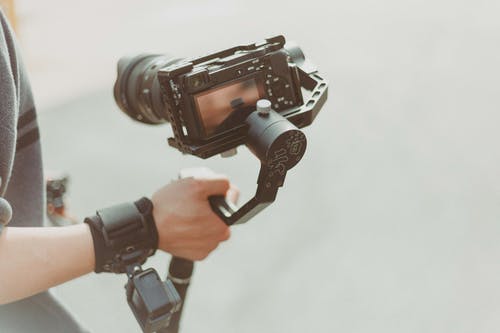
Contrary to the old adage of 'bad workmen blaming their tools', in the world of film, the kit you use really does make a huge difference. Whatever your budget, this is not the area to skimp out on. Hiring someone who has industry-standard kit will help with the quality and final outcome of your video. While we all love edgy indie-style film-making, shaky and blurry clips taken on an iPhone can lose their charm pretty quickly. Plus, think what it's saying about your brand. Good quality equipment goes a long way towards a great result and an engaged, entertained or motivated audience!
6. Build a world with sound.

Don’t neglect the sound. So often a brief arrives with everything else being thought through, but no thought for sound. I think it's vitally important because to me it’s about creating an experience for the viewer that allows them to use as many of their senses as possible, which includes sound. Music helps, voiceover is vital, and so is building a believable world. Don’t be afraid to add some foley (named after sound-effects artist, Jack Foley) in there because sometimes it's the tiniest details that have the biggest impact. Last week I was adding the rumble of a tractor and some birdsong to a film, and there's a hilarious video out there of me trying to recreate the sound of a bunny hopping over grass! Creating these effects makes a video more life-like and, just as importantly, can engage and captivate the viewer more.
7. Use the power of editing.

When looking for someone to shoot a video for you, the best gauge is to look at their editing. A good showreel will demonstrate their ability to make your film, advert or piece of content memorable.
I personally believe that because of the rapid rate that technology develops these days, it becomes increasingly harder to keep a viewer’s attention for even the shortest periods of time. So don’t make your video content last longer than it needs to. Less is more! As my old lecturer used to say, “Come in late and get out early”.
Additionally, a good videographer and editor will be able to take an hour's footage and turn it into several videos with the angles and themes needed without having to constantly film new videos for you. Worth thinking about if you're looking to get more bang for your buck, and a larger suite of usable content.
>>>>>>>>>>>>>>>>>>>>>
Any final thoughts, Jake?
Above all, I'd say try to enjoy every part of the process to creating your video. There is nothing more magical than having an idea and seeing it spring into life on screen, so have fun!


